Monday, September 20, 2010

Jalan-jalan Cari Hutan Paya Bakau at Matang (Matang Mangrove Forest)


After the visit to the Charcoal factory (written in previous post), we proceed to the next destination: Hutan Paya Laut Matang.

Mangroves offer a different experience than rainforests.

The Matang mangrove forest is a good place for anyone to get a natural education. An easy side trip from Taiping, take the time to explore this coastal habitat that supports waterbirds, fisheries and charcoal production.

Boardwalks take you into the mangrove swamp for close observation of the forest structure. Boat rides along the river at night showoff the sparkling splendour of fireflies.

Visit large kilns where freshly harvested mangrove trees burn into charcoal (see pics in my previous post). Or ask the Forestry Department to provide a nature guide to explain how the mangrove ecosystem functions.

Mangroves are special habitats. They protect the shoreline from erosion and tsunamis, provide shelter from wind, provide habitat for fish and shellfish, serve as stopover sites for migratory birds, and provide natural medicines and wood products.

For over 100 years, the Matang mangrove forest have stood out as a premier example of Malaysia's sustainable forest management. Trees are harvested after 30 years and extracted only with wooden wheelbarrows.

Mangroves are not spectacular, but they are interesting in many ways:

* Watch Long-tailed macaques clamber about the boardwalk and mangled tree roots.

* Try to figure out why trees develop leg-like stilt roots and air-breathing roots.


* Practice your bird and plant photography skills amid the serene silence of the forest.
* Bring the group or class for an ecological education on the adaptations of mangroves.

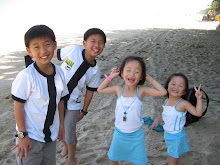
Here are some of my snap shots I took when I was there with my family of few adults and 9 kids:


Some facts to share:
Matang Mangrove Forest is one of the world's best managed Mangrove Forest.
This mangrove swamp should be one of the main attractions for many visitors scheduled to Larut.

Covering an area of more than 40,000 hectares, it is recognised as one of the most well managed expanse of mangrove swamps in the world and Perak has received various international awards for it.

Within this mangrove swamp are found multitudes of tree species, birds and marine life which is a haven for nature lovers.


Being next to the sea, mangrove plants evolved to adapt to harsh conditions. On your next trip find and explain some of these marvelous modifications?

* Roots That Anchor -- To keep strong against water currents, cable-like roots buried in the mud grow deep to hold the trees steady.
* Roots That Breathe -- With trees submerged in water, hundreds of pencil-thick roots grow upwards to take in oxygen and avoid water.
* Leaves That Take Out Salt -- Living in salty sea water means that leaves must take out the extra salts for trees to grow.
* Fruit That Floats -- Fruits stay longer on the parent tree before dropping into the mud or have air-pockets to float until it reaches soft ground.
* Thick And Leathery Leaves -- To conserve water in hot and salty conditions, some species have thick or waxy leaves for protection.

For more info, please contact:
Matang District Forest Office
Matang
Jalan Muzium, 34000 Taiping, Perak
Tel: 05-807 2762/5324
Fax: 05-806 7743
Website: www.perak.gov.my
Email: phdlm@perak.gov.my

Sunday, September 19, 2010

jaLan- jaLan Cari popiah


Those residents in Canning Garden Ipoh would be
familiar with this popiah stall by the road side at the lorong opposite a busy junction heading to a traffic light ( a few metres opposite Ipoh garden Mother of Perpetual church.


The old man is well knwn for his "cockiness"/ "stuck up"/ "arrogance"!!.
Dont state your orders and preference untill you have been asked by him.
Just Stand there and wait your turn to be asked or else be prepared to be sarcastically sound by him.


On 1 wooden platform he could prepare 14 popiah at one go!
Used to cost rm3 for a pair but today it's rm4 for 2. If u buy 1 it's
rm2.50 ech .


Cocky or not, people are still willing to queue in rain or shine to taste his wholesome popiah so generous in ingredients like boiled turnip, fried egg, cucumber, taufu, n his signature crab meat n deep fried crunchy homemade crushed prawn cracker , all rolled up in popiah skin n spreaded with chilly n red sweet sauce (Tim cheong).


Then comes the next question " Oi chit mou??" ( wanna cut or not?)
Some love to eat it like handroll without cutting. Most would like it cut by him (less messy)!

How many of you local Perakians have not tried it?
Even those who come back from abroad to their Ipoh hometown would still frequent
this stall for the yummy unforgetable taste envied by those locals who are abroad
and can't get to taste it like before!

Wednesday, September 15, 2010

Jalan-jalan cari Kilang Arang at Kuala Sepetang

During the recent Raya Aidilfitri holidays, hubby took us to visit a local charcoal factory in Kuala Sepetang (arrangement courtesy of his business friend).


This charcoal factory belongs to Mr. Chuah Chow Aun. He is the second generation in the family who own a charcoal factory since the 1930's. Mr. Chuah is a gifted story teller and it is hard not to listen to his passionate explanations of the charcoal production process.


Here are some photos taken during our visit to Mr. Chuah's charcoal factory - with 8 kids (4 are mine, their granny & my hubby, my sis & bro in law.


Mangrove logs waiting to be processed


the barks


The kids trying their hands to shave the tree barks.


Imagine a bakau minyak log weighs over 25 kgs per log and Mr.Chuah & wrkers carry then to and from the boat and then unload and carry all the way to the igloo-like kiln (pics below)!!


These furnace or igloo-like kiln are made from stacked up bricks and cemented with clay in a diameter circle of 3 meters.


The height from of igloo-like kiln is about 7 meter from top till bottom of dome.. There is only an opening for a man to carry the bakau or green wood log. We noticed some small hole openings on the middle of the kiln. We were told that it aids as air vents and opens and closes to help in the combustion process. The choice to use clay made sense as once the process is over, it is easy for the workers to break down the charcoal factory.


The drying of bakau minyak logs before baking in the igloo-like kiln .


We were inside the kiln..see the charcoal on the ground?


Mr chuah explaining the wonders of the "charcoal water" from the combustion process.

The moisture from the green wood baked inside the kiln were collected via a pipe to the barrel. The locals would come and collected these "charocal moisture"water as they believed it has healing properties e.g for mosquito bites & arthritis.

The finished product: Charcoal


Charcoal ready to be packed and

those packed & ready to be exported to mainly Japan.

Do you know some of the uses of Charcoal?

The Asian mostly uses charcoal for BBQ and steamboats. While the Japanese uses it for filtering the air and water. Even cleaning their teeth.

Cleaning the teeth with charcoal was also practiced by the Chinese. Some Chinese even tie two pieces with red ribbon and place them on the doorstep. It is very symbolic for Chinese to ask for blessing or prosperity.

We had a great time though the kids were too busy being occupied by other things like the mother dog & her puppies in the factory and the ice-cream man (who left after we came out of the visit, making kids soo disappointed!)

AFter the factory visit, we proceed to the Mangrove swamp


before going for seafood lunch.

Stay tune to my next posts on "Jalan-jalan Cari Hutan Paya at Matang" & "Jalan -jalan Cari Seafood at Kuala Sepetang:.

Tuesday, August 3, 2010

Jalan-jalan Redeem Hadiah kat Melaka!

Last Tuesday,my family was in Malacca to collect our prize from Oriental Food factory situated in Air Keroh Malacca. We won a prize from the contest organised by them called Jacker KickOff. For details pls hop to my other blog here.

We were day one day before and stayed in a quite decent and reasonable 6 years old hotel called The King's Hotel.
The room were more spacious than we expected. Though a bit old, the room were comfortable for a big family with 7 of us (3 adults & 4 kids) in it. Of course my two boys had to sleep on the floor with their sleeping bags and the floor space was spacious enough for them.

Some pics of the King's Hotel:
At the hotel lobby


While in Malacca, we had dinner at Nancy's Kitchen (near Jonker's Street). Here are some of the dishes we ordered:
Popiah


Cincalok Fried Egg


Babi Pongteh


Assam Tamarind Prawn


Fish Otak-otak


Chicken rendang


Sambal brinjal

I also pampered myself to a pair of Nyoya Handmade sandals cost RM150:

Wednesday, June 9, 2010

School holiday Jalan-jalan Cari Mkn, Cari Beach & shopping In Penang!

8June 2010

Bukit Tambun Seafood & Penang local favourites:

Fried Mantis Prawn Salad


Bukit Tambun DipFree Satay


Penang Air Itam Laksa


Penang Chee Cheong Fun


Penang Fried Kueh Tiaw


fun at TG BUNGAH beach